Key Points:
- Agentic AI executes workflows with limited human intervention.
- Autonomous systems increase operational complexity and governance risk.
- AI agents rely on interconnected APIs, tools, and third-party models.
- AI demos often differ significantly from real operational environments.
- Technology Due Diligence now includes visibility, control, and resilience assessment.
- For investors, AI governance is becoming a central technology risk issue.
What is agentic AI?
Everyone knows about generative AI tools. They are widely used to generate content when a user asks for it. They write text, summarise meetings, generate code, or answer questions.
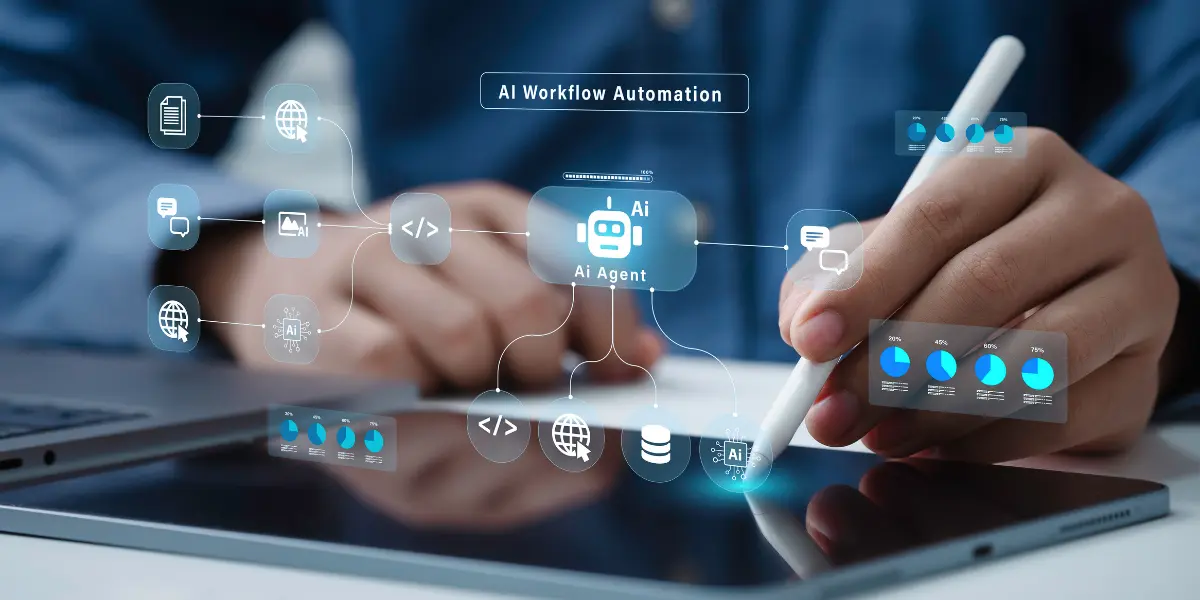
Agentic AI goes further. Instead of only generating content, these systems can execute tasks and workflows with limited human intervention.
They can retrieve information, interact with software tools, organise actions, and adapt their behaviour based on the situation.
Generative AI vs agentic AI
The core difference between Generative AI and Aagentic AI is autonomy. Generative AI helps users produce content or recommendations in response to a request. Agentic AI can organise tasks, trigger workflows, interact with software tools, and make decisions across multiple steps with limited human intervention.
This changes how software is used inside organisations. Traditional software systems follow predictable workflows and predefined rules. More autonomous AI systems can adapt their behaviour based on context, data, and interactions with other systems.
As autonomy increases, systems become harder to supervise and control. That is where technology risk mitigation starts to change for investors.
AI agents are becoming part of operational workflows
AI agents are no longer just software features. They increasingly become part of day-to-day operations.
Increasing operational complexity
An AI agent may interact simultaneously with CRM systems, internal databases, cloud infrastructure, and third-party AI models. As organisations become more dependent on APIs, orchestration layers, and dynamic data environments, operational complexity increases.
This creates new challenges around visibility, monitoring, and operational control. It also changes the scope of Technology Due Diligence.
The question is no longer only whether the technology works, whether it is risk free and scalable. It is now also how much visibility and control organisations still have as systems become more autonomous.
The gap between AI demonstrations and operational reality
The current AI narrative often presents agentic AI as an immediate productivity driver. For investors, the equation appears attractive: more automation, leaner operations, faster execution, and stronger EBITDA margins. In controlled demonstrations, AI agents can deliver impressive results. But production environments are far more complex than demos.
Inside real organisations, AI agents interact with multiple systems, APIs, databases, and operational workflows that constantly evolve. As autonomy increases, maintaining visibility and operational control becomes significantly more difficult. The challenge is therefore no longer building an AI prototype but deploying autonomous systems that remain reliable and controllable at scale.
From productivity gains to operational risk
For software companies, agentic AI can improve operational efficiency by accelerating execution and automating repetitive workflows.
However, the reality becomes more complex once autonomous systems are integrated into day-to-day operations.
For example:
- a customer support AI agent may reduce manual workload while mishandling sensitive requests or escalating inaccurate information
- a coding assistant may accelerate software delivery while introducing technical debt or security vulnerabilities that become difficult to detect over time
As organisations increase their reliance on AI-driven workflows, operational dependencies also increase. Systems become more interconnected, decision chains harder to trace, and operational errors more difficult to identify and correct.
For investors, the challenge is therefore not only measuring productivity gains. It is understanding whether these gains remain sustainable as operational complexity increases.
Why human oversight still matters
Despite rapid progress in autonomous systems, AI agents still require human supervision in complex operational environments.
For example:
- an AI agent may automatically update customer, billing, or operational data across multiple systems without detecting the business consequences of an incorrect action
- an autonomous workflow may follow instructions correctly while making decisions that damage customer relationships, compliance processes, or operational priorities
As organisations automate more workflows, the challenge is to preserve the operational expertise and business judgement that autonomous systems still cannot replicate.
For investors, this raises important questions around operational resilience and key person dependency, particularly when critical knowledge remains concentrated within a small number of experienced employees.
How agentic AI adds new dimensions to Technology Due Diligence
Technology Due Diligence remains focused on core technology fundamentals such as software architecture, scalability, cybersecurity, infrastructure resilience, and technical debt. These dimensions remain essential to assessing a company’s ability to scale and generate long-term value.
However, when a company’s business model becomes increasingly dependent on AI or autonomous systems, additional areas of assessment become critical.
The challenge increasingly lies in evaluating whether autonomous systems can operate reliably within complex operational environments.
AI introduces additional areas of assessment
When AI becomes part of the operating model, investors also need to understand how autonomous systems are built, supervised, and maintained over time.
This may include assessing:
- dependency on third-party AI providers for critical capabilities
- visibility and traceability over AI-generated actions and decisions
- monitoring and escalation mechanisms for sensitive workflows
- the ability of internal teams to supervise, maintain, and control AI-driven systems over time
- whether the codebase itself is structured and governed in a way that allows AI coding agents to operate safely and consistently
As AI-assisted development accelerates, code quality, governance, and maintainability become increasingly important. An autonomous system is only as reliable as the operational and technical environment it operates in.
For investors, the key challenge is understanding whether automation can scale without creating operational fragility or long-term quality degradation.
Assessing resilience and MOAT
As AI tools become more accessible, automation alone may no longer represent a sustainable competitive advantage.
Understanding the impact of AI also means assessing the strength of a company’s MOAT. As AI development becomes faster and more accessible, investors need to understand whether the asset remains sufficiently differentiated and complex to avoid being replicated in a short timeframe.
This may include proprietary operational knowledge, customer relationships, internal expertise, high-quality data, or the organisation’s ability to maintain control and service quality as automation scales.
For investors, the challenge is therefore not only evaluating AI adoption, but understanding whether the company can preserve differentiation and long-term value creation as AI becomes more widespread.
Why governance is becoming a central investment question
As AI systems become more autonomous, maintaining visibility, supervision, and operational control becomes increasingly critical.
For Private Equity investors, the opportunity lies in identifying companies that use AI to improve scalability and operational efficiency without weakening resilience, governance, or long-term value creation.
This is why governance is becoming an increasingly important technology risk consideration during Technology Due Diligence.
Autonomy without control is not scalability. It is unmanaged risk.
Disclaimer
The opinions, presentations, figures and estimates set forth on the website including in the blog are for informational purposes only and should not be construed as legal advice. For legal advice you should contact a legal professional in your jurisdiction.
The use of any content on this website, including in this blog, for any commercial purposes, including resale, is prohibited, unless permission is first obtained from Vaultinum. Request for permission should state the purpose and the extent of the reproduction. For non-commercial purposes, all material in this publication may be freely quoted or reprinted, but acknowledgement is required, together with a link to this website.